Hello, my name is Rob Nelson, and I am a Curriculum and Instructional Designer who creates interactive, inquiry based, STEM and leadership learning experiences. This portfolio includes interactive curriculum made with Articulate 360 and sample assessments, curriculum maps, and planning systems. I integrated AI to improve quality with efficient research and creation of visual content.
Click a picture below to learn more about these case studies
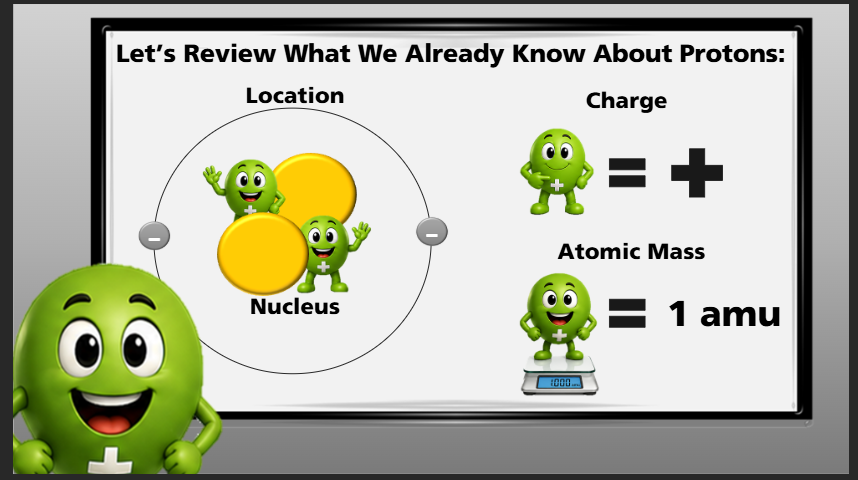
Protons and Atoms : Interactive Articulate Storyline Module
The Trust Account: Scenario-based Articulate Storyline
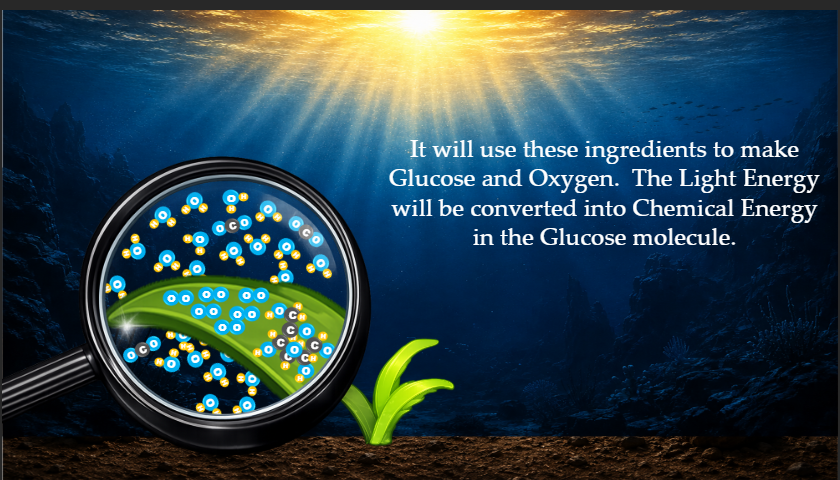
Food Webs: AI-Enhanced E-learning with Articulate Storyline
“Learn something new, uplift someone, do something hard…every day” – Nelson
Learning through creation and experiences
Personal Recommendations
“Your attitude will put you on the path or take you from it.” – Mr Nelson
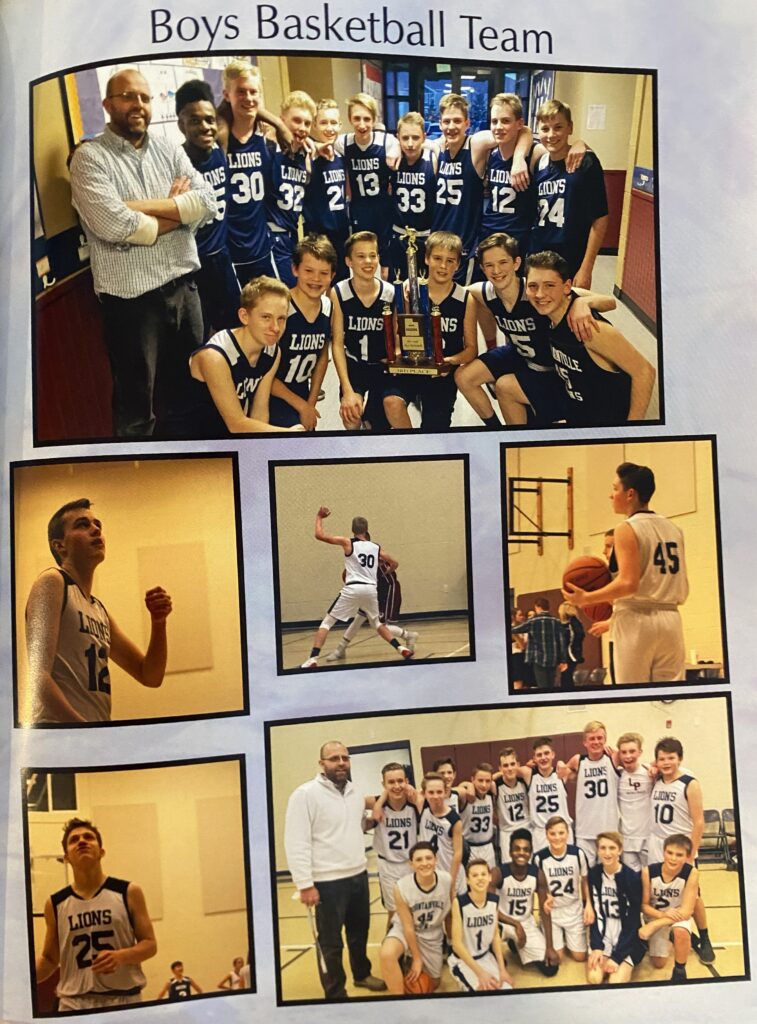


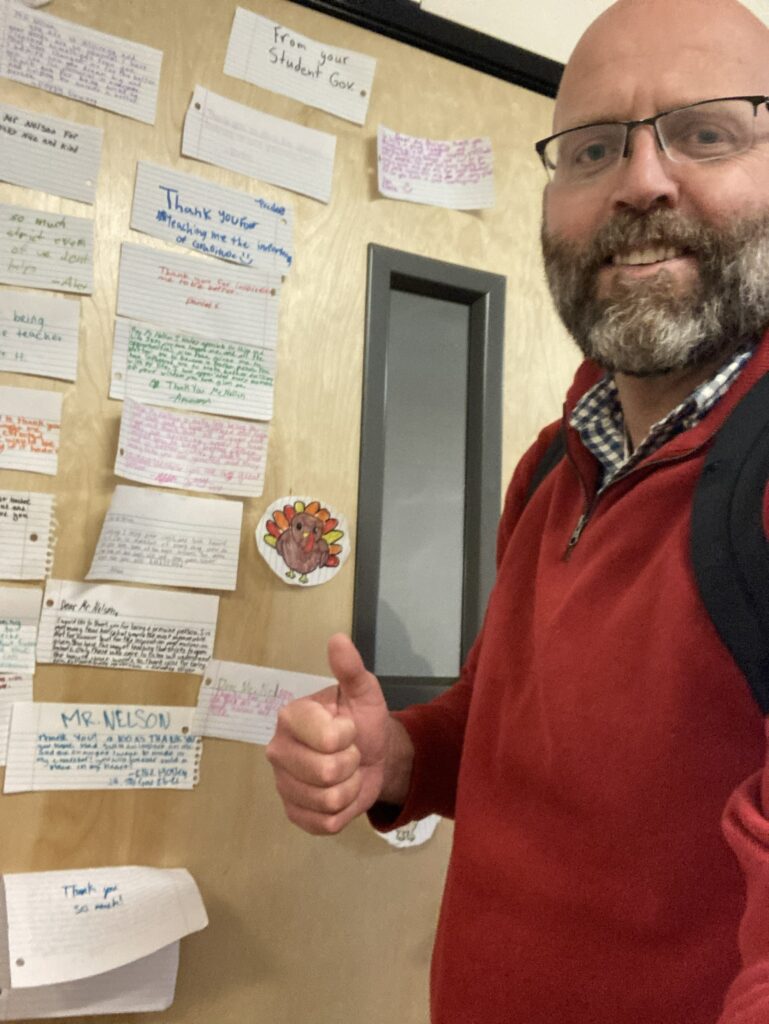
Applied Learning
Cross-Cutting Hydraulic Arm Leadership and Team Building Project
Executive Summary
This project showcases the redesign of a standard biological science lesson—focused on muscle interaction—into a comprehensive, hands-on, cross-curricular STEM and leadership unit. By embedding Next Generation Science Standards (NGSS) with real-world business structures, middle/high school students gain practical experience in mechanical engineering, teamwork, and organizational synergy.
Project Overview
| Attribute | Details |
| Project Title | Hydraulic Arms Application & Leadership Synergy |
| Target Audience | Middle School / High School Science & Leadership Students |
| Framework Alignment | Next Generation Science Standards (NGSS) & Leadership Education |
| Key Deliverables | Business Interview Framework, Functional Hydraulic Arm Models, Student Self-Reflection & Final Reports, Video Demonstrations |
| Key Tools / Materials | Syringes, Tubing, Fluid Mechanics Materials, WordPress Portfolio Integration |
The Challenge
- Limited Scope: Traditional lessons on human muscular and skeletal movement often rely on passive textbook learning or static models, missing opportunities for engineering applications.
- Siloed Skills: Technical science lessons frequently isolate core academic concepts from soft skills like communication, project management, and collaborative problem-solving.
The Solution
- Cross-Disciplinary Expansion: Transformed a simple human biology concept into a leadership unit centered on organizational synergy.
- Business Structure Simulation: Instead of typical lab groups, students are organized into “Businesses.” Participants undergo a formal job interview with a designated business owner before joining the project.
- Hands-On Performance Expectations: Teams design and construct customized hydraulic arms designed to accomplish specific real-world functional tasks (e.g., drawing, painting). Projects are evaluated on completion, design uniqueness, and team coordination.
- Reflection & Assessment: Concluded the unit with an Arm Final Report, requiring individual and group self-assessments to evaluate both technical execution and group dynamics.
Key Features & Highlights
- Real-World Student Demonstration Videos: Features video documentation showing student-built hydraulic arms performing functional tasks such as drawing and painting.
- Simulated Workplace Hiring: Integrates career-readiness elements by requiring student job interviews to establish roles within each project team.
- Comprehensive Reflection Artifacts: Includes downloadable evaluation templates (Arm Final Report.docx) to measure student growth across technical and leadership dimensions.
Results & Impact
- Enhanced Student Engagement: Elevated a standard science concept into an interactive, multi-week leadership challenge that models authentic engineering workflows.
- NGSS Alignment: Successfully created an integrated learning module that aligns with performance expectations in engineering design and scientific application.
Hydraulics Arms Application
This project is exactly what the Next Generation Science Standards are moving toward. This is a leadership lesson focused on synergy. Not only do they make this as a team, they have to work together to manipulate the arm for their presentation.
The Performance Expectations for this project are to create the arms to perform a particular task with points for completion, uniqueness, and teamwork.
Each group is organized into Businesses rather than just teams. This means every participant interviews with a business owner for a job working on their project.
The arm started as a science lesson to explain how the muscles work together to make arms work. I found as we worked on this that the lesson in synergy was so strong I needed to include it in my leadership class.
Have a look!
Structural Integrity Project Overview
This instructional unit bridges physical science concepts with character education by connecting structural integrity in engineering to personal integrity in leadership. Designed for middle school students (7th grade), the unit uses hands-on group projects, visual model demonstrations, and video reflection to make abstract moral principles tangible and memorable.
Integrity as a Harness
Integrity as a foundation
Integrity during stress
The Challenge
- Target Audience: 7th-grade students enrolled in a core leadership and character development program.
- Problem Statement: Principles like “integrity,” “resilience,” and “moral foundation” are often taught through abstract definitions, making it difficult for younger students to connect these concepts to real-world choices and behavior.
- Goal: Create a multi-modal learning experience where students construct physical models (e.g., harnesses, foundations) to demonstrate how structural principles parallel human ethics and relationships under stress.
Instructional Strategy & Learning Objectives
Learning Objectives
By the end of this unit, students will be able to:
- Define integrity in both a physical/structural context and an interpersonal context.
- Analyze how physical support structures (foundations, harnesses, load-bearing elements) mirror moral frameworks and support systems in leadership.
- Evaluate how personal integrity responds under pressure or stress, identifying strategies to maintain ethical boundaries.
Pedagogical Alignment
- Bloom’s Taxonomy: Moves from Understanding (explaining structural vs. personal integrity) to Creation (building physical models) and Analysis (demonstrating and recording video explanations of their concepts).
- Cross-Curricular Integration: Blends physical science/engineering principles with Stephen R. Covey’s leadership frameworks (The 7 Habits of Highly Effective Teens).
Implementation & Media Components
Hands-On Demonstration & Video Projects
Students worked individually or in small groups to build physical representations connecting engineering to ethics, documenting their concepts through video demonstrations:
- Integrity as a Harness (Relationships): Demonstrates how supportive relationships and accountability act as safety harnesses, distributing stress and preventing individual failure.
- Integrity as a Foundation (Core Principles): Illustrates how a solid, level foundation allows a structure—or a person’s character—to withstand environmental weight and pressure.
- Integrity During Stress (Resilience): Explores how materials bend or break under load, highlighting the importance of stress-testing moral choices before high-pressure situations arise.
Results & Impact
- Conceptual Retention: Connecting physical manipulation (building models) with abstract reflection significantly improved students’ ability to explain and apply leadership habits.
- Peer Teaching & Ownership: By recording and sharing their video explanations, students took active ownership of the curriculum, presenting their models to classmates and reinforcing peer-to-peer learning.
- Portfolio & Authentic Assessment: Created a tangible, artifact-based assessment format that replaced traditional rote testing with creative, student-driven demonstration.
Social Business Lesson and Assignment
Project Overview
This unit introduces middle school leadership students to social entrepreneurship through the story of Dr. Muhammad Yunus and the founding of the Grameen Bank. Inspired by the concept of “social businesses”—enterprises created specifically to address societal problems in a self-sustaining way—students design their own service-driven business plans and present formal proposals to school administration.
The Challenge
- Target Audience: 7th and 8th-grade leadership students.
- Problem Statement: Standard service projects often lack student ownership, while traditional business units focus heavily on profit over social impact. Additionally, middle schoolers rarely experience the real-world administrative hurdles involved in turning an idea into an active initiative.
- Goal: Create an authentic learning experience where students identify real needs in their local community, pitch ideas, build collaborative teams, and draft formal project proposals to present to school stakeholders.
Instructional Strategy & Learning Objectives
Learning Objectives
By the end of this project, students will be able to:
- Analyze the mechanics of micro-loans and social enterprises using historical case studies (The 8th Habit by Stephen Covey / Dr. Muhammad Yunus).
- Develop a structured business plan identifying a target social need, required resources, project timelines, and operational steps.
- Persuade and Present: Draft a formal administrative proposal and pitch the concept to peers to recruit team members and build support.
- Demonstrate Resilience: Evaluate project feedback or administrative rejection, adapting plans constructively when obstacles arise.
Pedagogical Alignment
- Bloom’s Taxonomy: Combines Analysis (evaluating community needs), Creation (drafting complete business proposals), and Evaluation (navigating administrative approval and adjusting for failed proposals).
- Student-Driven Autonomy: Students retain full agency over project selection, deciding whether to lead their own company or join a classmate’s initiative.
Implementation & Execution
- Foundational Discussion: Exploration of micro-finance and social business concepts using the story of the $27 loan in Bangladesh that launched the Grameen Bank.
- Business Plan & Proposal Drafting: Using a standardized proposal template, students formulate concepts designed to serve specific groups (e.g., crocheting beanies for cancer patients, creating blankets for newborns).
- Peer Recruitment & Pitching: Students present their business plans to classmates, choosing to combine efforts into larger venture teams or refine individual proposals.
- Administrative Review & Real-World Friction: Teams submit formal proposals to administration. When proposals encounter administrative roadblocks, students analyze failure points and practice professional pivot strategies.
Results & Impact
- Authentic Leadership Development: Students experienced the complete lifecycle of project management—from ideation and team-building to real-world administrative negotiation.
- Community Connection: Fostered genuine empathy by encouraging students to look beyond the classroom and address needs in their local communities.
- Constructive Resilience: Navigating administrative hurdles turned project delays or rejections into valuable learning moments about policy, compliance, and perseverance.
Social Business Project Explained
While teaching leadership, I found this story in “The 8th Habit” by Stephen Covey about Dr. Muhammad Yunus. Dr. Yunus was an economics professor in Bangladesh in the 1970’s. He discovered that the principles he had learned in the US did not apply to the poverty-stricken area where he was teaching at the time. When he would leave at the end of the day, he would see people starving on the streets and wanted to help. The short version of that story is that he took one of his students to visit these people. They met a woman who worked hard to make stools out of bamboo. It would cost her $0.25 for the bamboo to make the stool. But her supplier would make her sell them back to him for $0.27. She made a profit of $.02. They went around the village to see how many other people were in similar situations and discovered that ALL of the people in that village could get on their feet with an investment of $27 total. He gave it to them as a loan, and they all paid him back. The people he helped began to flourish. Dr. Yunnus sought help for the people from their local banks. They would not invest in the poor because they refused to believe they were credible. Failing to attain funding for these businesses from regular banks, he started his own, the Grameen Bank, which specialized in these tiny loans. He did not stop there. He continued to look for the needs of his community. He started a number of “social businesses”. These are businesses that have the goal of solving a problem rather than making a profit. However, they were meant to be self-sustaining.
This story illustrated how finding our voice is using our talents and passions to solve a need, and in so doing, inspire others to find their voice as well. We had a great discussion concerning this subject in class. We decided to make a small version of our own “social businesses”. Below is a template of the write-up that the students filled out during the planning period. They made business plans and proposals. They would then share their plans with each other to recruit others to their project. They had a choice to stick with their own business or work for someone else. Once they had their “companies,” they would work on a proposal for the administration and try to turn it into a service opportunity. They did not turn into true Social Businesses, but they inspired students to look for ways to serve in their community. I had students make beanies meant for cancer patients, and others make blankets for newborns. Many ideas would get stuck as we tried to get them passed through the admin. This was a great oppotunity to teach how to deal with a failed proposal. It was an amazing project that allowed more autonomy for students.
Mystery Escape Room Curriculum
This project aligns with the Next Generation Science Standards
Middle School Engineering Design
- Students begin by planning out puzzles and clues considering things like time and cost.
- Repurposing teaches the students about ingenuity and problem solving as well as economic considerations.
- Students test out parts of their puzzles and clues to make sure they are reliable methods.
- Students build prototypes to test functionality.
Science and Engineering Practices
- The constructing of the physical mechanisms.
- Designing the artifacts to emulate real-world items.
- Using Mathematics and computational thinking to solve codes, ciphers, and logic puzzles.
Crosscutting Concepts
The physical design of the locks and artifacts.
Understanding how clues and storylines interact to create a cohesive escape room system.
Connecting how certain actions work to create a specific outcome.
Project Based Learning Application
The escape room is one of many project-based learning examples from my leadership and science curriculum. It is a multi-week and multi-faceted curriculum. The question was: How do we create an immersive escape room experience with limited time, money, resources using our STEM skills and artistic ingenuity.
Puzzle Examples


The town maze is a marble run that is actually pretty complex. The Pharaoh (below) actually holds the key to open the latch that lets the marble out. It goes through complex tunnels and pathways to get to the spot where it pushes the latch and opens a box on the bottom.
The second picture is called a Jefferson Wheel. It was invented by Thomas Jefferson in the 1790’s. It was designed to allow secret messages to be passed. The device consists of rotating disks, each featuring a scrambled alphabet. The two people have identical disks and the code will be a random order of letters but on the identical disk, it creates a row with the message on it. In our escape room, each puzzle gave them another disk so they could put it together. They will receive the code as well in one of the puzzles.
The Pirate map has it’s own secret code using one letter from each map spot. Putting the letters together gave the words to a number code.
The Dinosaur Dentist puzzle requires players to locate the dinosaur’s missing tooth. The other teeth have a switch inside that has to move and the missing tooth added in order to make the mouth open, revealing the box with the Jefferson Wheel inside.
Emperor’s Sarcophagus


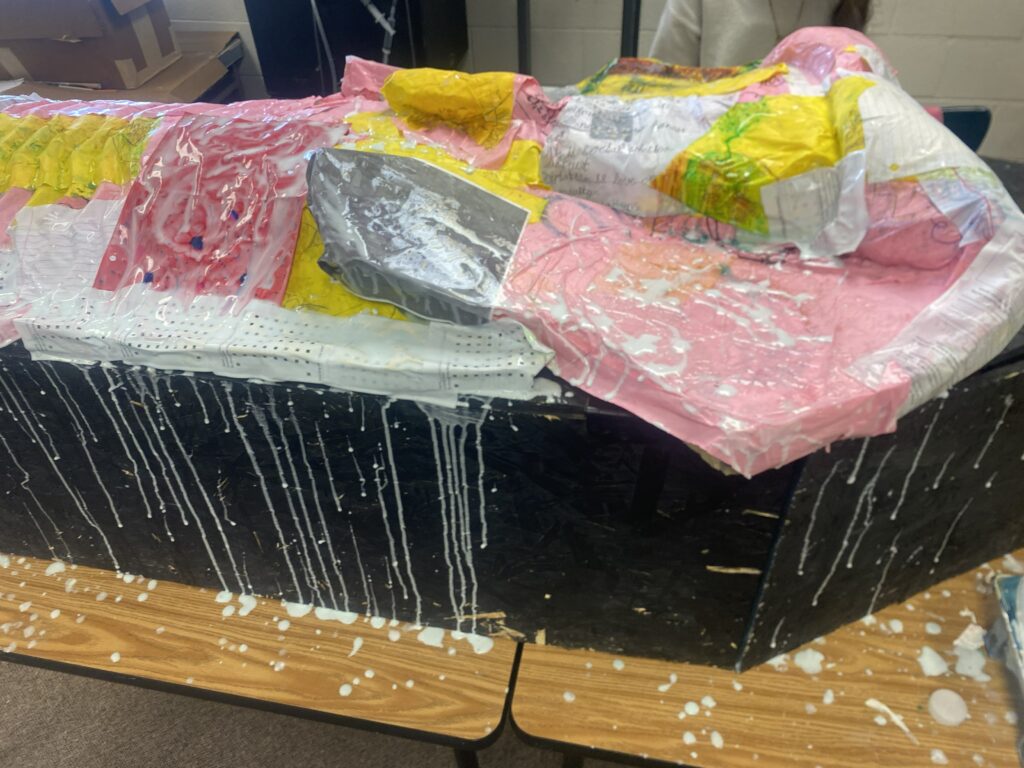

Pharaoh’s tomb started with a simple plywood coffin used for the Halloween Scare Hall. I had a broken up bed mat that we used to round out the top. Foam for the Pharoh’ headdress and styrofoam sculpted with a burner to make the face. Then began the paper mache! it was very messy, but brought everything together and solidified. The base coat of paint was a tan color and it was spray painted with gold paint.
The locking mechanism was made with wood and 5 sided wheels. Each side has a picture on it and when you put the correct pictures in order it will open. They slide through the latch when in the right order.
Assessments
Summative
Formative


Curriculum Maps
Engineering apps with AI
Kindergarten Weather App
Project Overview
- Target Audience: Kindergarten – 4th Grade Science Learners
- Subject Area: Earth & Space Sciences / Physical Science
- Primary Role: Instructional Designer & Curriculum Developer
- Tools & Technologies: HTML5/JavaScript, iFrame Integration, WordPress, Next Generation Science Standards (NGSS) Alignment
1. Problem Statement & Educational Need
Early elementary learners often struggle to bridge abstract scientific concepts—such as meteorological patterns or molecular interactions—with tangible, everyday observations.
To address this gap, this unit provides a dual approach: an interactive, digital weather observation tool for early learners (Kindergarten) alongside visual, conceptual metaphors (such as visual atomic representations) for elementary science topics (4th Grade). The goal is to active student engagement through intuitive UI/UX while reinforcing standard-aligned science practices.
2. Standards & Learning Objectives
Next Generation Science Standards (NGSS) Alignment
- K-ESS2-1: Use and share observations of local weather conditions to describe patterns over time.
- 4-PS3-2: Make observations to provide evidence that energy can be transferred from place to place by sound, light, heat, and electric currents.
Core Learning Objectives
- Observe & Identify: Students identify daily weather phenomena (temperature, precipitation, cloud cover) using real-time digital tools.
- Model Concepts: Students differentiate between physical and chemical molecular changes using visual, relatable analogies.
- Data Literacy: Early learners record weather metrics over time to identify seasonal trends and patterns.
3. Instructional Strategy & Design Process
[ 1. ENGAGE ] ────> [ 2. EXPLORE ] ────> [ 3. EXPLAIN ] ────> [ 4. EVALUATE ]
Interactive App       Student Hands-On      Conceptual Visuals    Formative Assessment
Weather Logging       Metric Exploration   Molecular Metaphors    Student Reflection
Instructional Framework: 5E Instructional Model
- Engage: Students interact directly with the embedded Weather Station applet on the digital dashboard to check current local weather conditions.
- Explore: Learners adjust parameters, log daily temperature readings, and compare visual visual cues (sun, rain, snow).
- Explain: Complex interactions (such as phase changes or physical versus chemical reactions) are scaffolded using visual representations and kinetic analogies.
- Elaborate: Students apply their weather observations to draw broader conclusions about localized seasonal patterns.
- Evaluate: Integrated formative checks evaluate student understanding of atmospheric metrics and basic physical science concepts.
4. Technical Implementation & Accessibility
- Seamless Web Embedding: Built and deployed using a clean HTML5
<iframe>container embedded into WordPress via a Custom HTML block, ensuring full visual fidelity and responsive scaling across desktop and tablet interfaces. - Universal Design for Learning (UDL): High-contrast visual elements, intuitive graphical controls for early readers, and multi-modal instructional formats support diverse learning needs.
- Fallbacks & Technical Robustness: Designed to degrade gracefully with direct link options if client-side network restrictions hinder iframe rendering.
5. Assessment & Results
- Formative Tracking: Students successfully record and summarize 5-day weather trends using structured recording sheets aligned with the digital app output.
- Conceptual Mastery: Student checks demonstrate improved conceptual retention when abstract physical science concepts are paired with interactive visual models compared to traditional text-only instruction.